
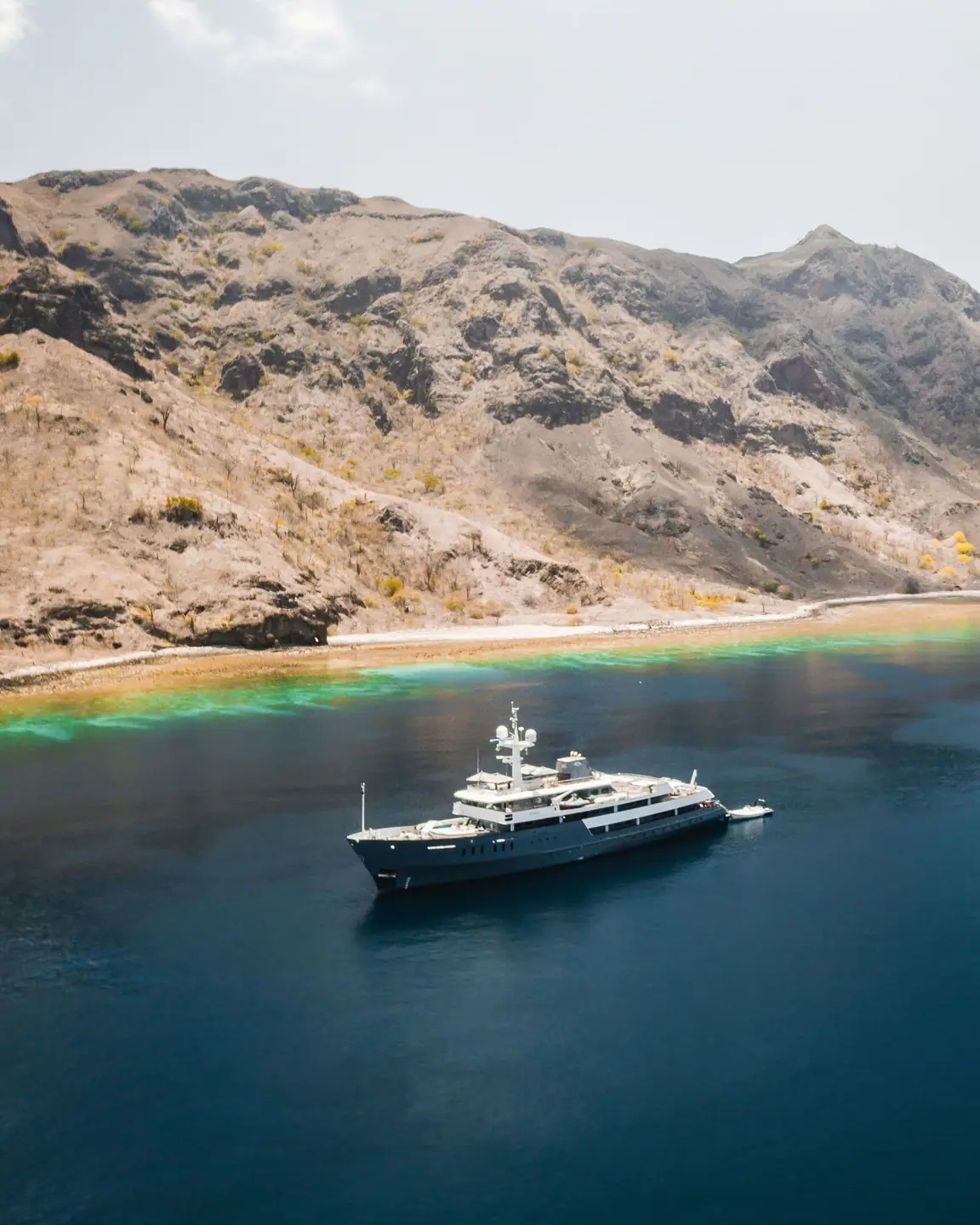
Planning a Komodo private tour is not only about choosing which islands to visit. In Komodo National Park, timing can shape when you hike, enter the water, and look for wildlife. A flexible itinerary that considers tides, animal activity, weather, and visitor flow can make the journey safer and more rewarding.
Why Does Timing Matter in Komodo National Park?
Komodo National Park is a UNESCO World Heritage Site covering 219,322 hectares. It protects Komodo, Rinca, and Padar, along with surrounding islets and extensive marine habitat. UNESCO also highlights the park’s coral reefs and strong sea currents, which attract turtles, dolphins, whales, and other marine life.

Hiking, wildlife viewing, beaches, snorkeling, and diving can all be affected by the time of day or sea conditions. A Komodo private tour gives travelers more room to arrange activities around those variables rather than forcing every stop into a fixed schedule.
How Should Tides Shape Your Komodo Itinerary?
Tides are especially important for diving and snorkeling because currents around Komodo can be powerful. Official Komodo National Park dive guidance recommends slack tide for several sites, including Batu Bolong, while other locations are better on rising or falling tides depending on current direction.
Water activities should therefore be planned with an experienced captain and dive team, rather than by the clock alone. If a reef is not suitable in the morning, trekking or a beach stop may work better.
For travelers considering a Yacht in Indonesia, this flexibility is a major advantage. A well-planned yacht charter itinerary in Indonesia can be adjusted as conditions develop.
When Is the Best Time for Wildlife?
Komodo dragons are the park’s most famous residents, but encounters cannot be guaranteed. Indonesia’s official tourism guidance recommends April to June and September to December as favorable visiting periods, with September to November highlighted for wildlife viewing. July and August are the dragons’ mating season, when sightings may be more difficult.
Marine life adds another layer to planning. Manta rays, reef sharks, and turtles can be encountered in Komodo waters, but sightings depend on natural conditions. A private Komodo Island tour benefits from leaving room to adjust the route, rather than promising one species at a fixed place or time.
Visitors should also follow ranger instructions when trekking near dragons. Official Indonesian tourism guidance states that a local guide is mandatory for these wildlife treks.
How Can You Avoid the Busiest Periods?
Komodo’s best-known sites naturally attract visitors, particularly during peak holiday periods. Indonesia’s tourism authority recommends avoiding July and August if fewer crowds are a priority, while April to June and September to November offer alternative windows.
Instead of following the same landmark sequence as day trips, a captain can balance famous stops with quieter anchorages and shift activities around local conditions.
Traveling aboard a luxury private yacht in Indonesia makes this easier, as the route can be tailored to the group. Choosing a luxury yacht Komodo experience can also create more space for longer water activities, relaxed meals, and flexible departures.
What Should a Balanced Day Look Like?
A strong itinerary combines active experiences with time to slow down. A day could begin with an early hike, continue with breakfast onboard, and then move on to snorkeling when the tide is more suitable. The afternoon might include a beach visit or quiet anchorage before sunset.
Another day may prioritize diving first and move a land excursion later. This is where a Komodo private tour becomes especially useful: the day can adapt to the environment rather than treating every destination as a fixed appointment.
Guests comparing a luxury boat Komodo journey with a conventional day trip should look beyond cabin design. Crew knowledge, tenders, and familiarity with local waters can influence how smoothly each day unfolds.
How Many Days Should You Allow?
The Yacht Club Indonesia currently presents sample Komodo itineraries ranging from 4 days/3 nights to 8 days/7 nights, showing how the destination can be approached at different paces. Its sample four-day route combines Sebayur, Manta Point, Karang Makassar, Padar, Pink Beach, Rinca, and Labuan Bajo.
The ideal duration depends on priorities. Travelers focused on trekking may need less time than guests who want repeated dives, photography, or remote anchorages. A Komodo yacht charter works well for mixed groups because different interests can be spread out over several days.
Rather than asking how many attractions fit into the schedule, consider how much time you want at each place. A slower route also leaves more flexibility when conditions change.
How Should You Plan for Changing Conditions?
Start with priorities, not a minute-by-minute plan. Decide which experiences matter most: dragons, diving, manta encounters, Padar, beaches, or photography, then let the yacht team arrange them around actual conditions.
Indonesia’s BMKG provides dedicated marine forecasts for Labuan Bajo and Komodo National Park waters, allowing operators to review current marine conditions when planning navigation and activities.
The strongest itineraries combine preparation with flexibility. Captains, cruise directors and guides can use forecasts, tide information and local knowledge to adjust the route while preserving the core experiences.
Plan a Smarter Komodo Journey
The best Komodo experience is not necessarily the itinerary with the most stops. It is the one that puts each activity at the right moment. By considering tides, wildlife behavior, crowd patterns, and marine conditions, travelers can experience the park at a more natural pace.
For anyone planning a private Komodo tour, flexibility is key. With thoughtful timing and an experienced yacht team, Komodo becomes more than a sequence of famous landmarks; it becomes a journey shaped around the rhythm of the national park itself.
 Gary Holmes